
Tris(1-chloro-2-propyl) phosphate (TCPP) (CAS 13674-84-5), identified by CAS No. 13674-84-5, is a prominent organophosphorus flame retardant. It appears as a colorless, transparent liquid with low viscosity, even at lower temperatures. As a key product from AECOCHEM, this chemical serves as a vital additive in the production of polyurethane (PU) foams, PVC, and various resins, offering a cost-effective solution for fire safety and material enhancement.
Key Features and Properties of TCPP (13674-84-5)
TCPP is valued not only for its fire-resistant capabilities but also for its ability to improve the physical characteristics of polymers. It is a mixture of isomers, typically containing about 66% of the main isomer, tris(1-chloro-2-propyl) phosphate.
Flame Retardant Mechanism
-
Chlorine & Phosphorus Action: TCPP functions as a halogenated organic phosphate. The combination of chlorine and phosphorus provides a synergistic effect that inhibits combustion, making it highly effective in rigid and flexible PU foams, EVA, and phenolics.
-
Multi-Functional Additive: Beyond fire resistance, it enhances the material's moisture resistance, antistatic capabilities, and softness, while improving low-temperature performance.
Physical Properties
-
Appearance: It is a clear, colorless, oily liquid that ensures easy handling and mixing during industrial processes.
-
Viscosity: The compound exhibits low viscosity, which facilitates better flow and dispersion within polymer matrices.
Density
-
Molecular Weight: With a molecular weight of 327.57 g/mol (Formula: C₉H₁₈Cl₃O₄P), it possesses a density significantly higher than water, typical for chlorinated phosphates, ensuring it integrates well into heavy-duty formulations.
Solubility
-
Solvent Compatibility: Tris(1-chloro-2-propyl) phosphate (TCPP) (CAS 13674-84-5) is insoluble in water but dissolves readily in most organic solvents. This property allows it to be easily incorporated into solvent-based resin systems and coatings.
Compatibility
-
Resin Integration: It demonstrates excellent compatibility with a wide range of synthetic materials, including Polyurethane (PU), Polyvinyl Chloride (PVC), Ethylene-Vinyl Acetate (EVA), and epoxy resins.
-
Stability: Among available halogenated organic phosphates, TCPP is noted for having superior hydrolytic stability, ensuring the longevity of the treated materials.
Technical Specifications
|
Property
|
Details
|
|
Product Name
|
Tris(1-chloro-2-propyl) phosphate (TCPP)
|
|
CAS Number
|
13674-84-5
|
|
Molecular Formula
|
C₉H₁₈Cl₃O₄P
|
|
Molecular Weight
|
327.57
|
|
Synonyms
|
Phosphoric acid tris(2-chloro-1-methylethyl) ester; Tris(2-chloroisopropyl) phosphate
|
|
Appearance
|
Colorless transparent liquid
|
|
Standard Package
|
200kg drum, 1000kg IBC, or 23000kg ISOTANK
|
FAQ:
Here are answers to frequently asked questions regarding Tris(1-chloro-2-propyl) phosphate (TCPP), covering its applications, safety profile, and physical characteristics.
What is it used for?
Tris(1-chloro-2-propyl) phosphate (TCPP) (CAS 13674-84-5) is primarily used as an additive flame retardant in the polymer industry. Its key applications include:
-
Polyurethane (PU) Foams: It is extensively used in both rigid and flexible foams for insulation and furniture.
-
Resins and Plastics: It is added to PVC, EVA, phenolics, and epoxy resins to improve fire resistance.
-
Material Enhancement: Beyond fire safety, it acts as a plasticizer to improve moisture resistance, antistatic properties, and low-temperature flexibility.
What are the health risks?
Handling TCPP (CAS 13674-84-5) requires adherence to safety protocols to minimize exposure risks.
-
Irritation: Direct contact with the liquid can cause irritation to the skin and eyes.
-
Inhalation: Inhalation of vapors or mists may irritate the respiratory tract.
-
Precaution: Proper ventilation and personal protective equipment (PPE), such as gloves and goggles, are recommended during industrial handling.
Is it the same as TCEP?
No, they are distinct chemical compounds, although both are organophosphate flame retardants.
-
Chemical Structure: TCEP is Tris(2-chloroethyl) phosphate, while TCPP is Tris(1-chloro-2-propyl) phosphate.
-
Properties: TCPP generally offers better hydrolytic stability and lower volatility compared to TCEP, making it more suitable for certain polyurethane applications.
Where is it found?
Because it is an additive flame retardant (meaning it is mixed into materials rather than chemically bonded), Tris(1-chloro-2-propyl) phosphate is commonly found in:
-
Building Materials: Insulation boards and construction panels made with rigid PU foam.
-
Consumer Goods: Upholstered furniture, mattresses, and carpet underlays containing flexible foam.
-
Automotive Parts: Interior components utilizing flame-retardant plastics or foams.
What are its physical properties?
Tris(1-chloro-2-propyl) phosphate (TCPP) (CAS 13674-84-5) is characterized by specific physical traits that make it easy to process in manufacturing.
-
Appearance: It is a clear, colorless, transparent liquid.
-
Viscosity: It has low viscosity, allowing for easy pumping and mixing even at lower temperatures.
-
Solubility: It is insoluble in water but soluble in most organic solvents and compatible with various resins.
-
Molecular Weight: 327.57 g/mol.
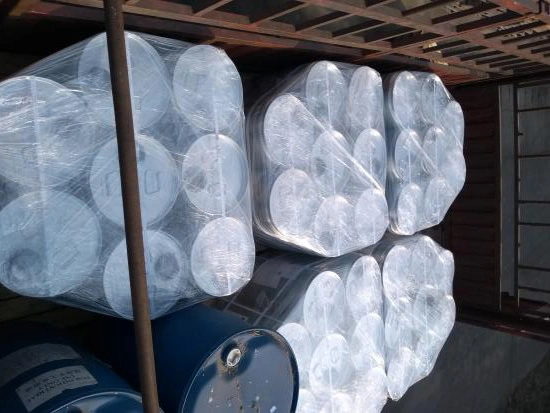
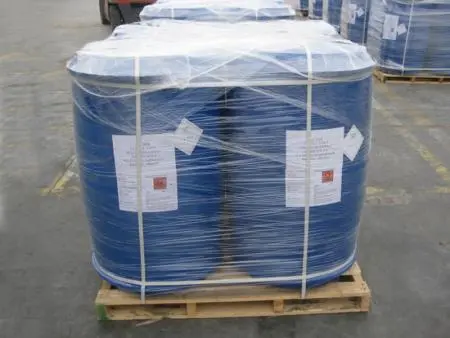
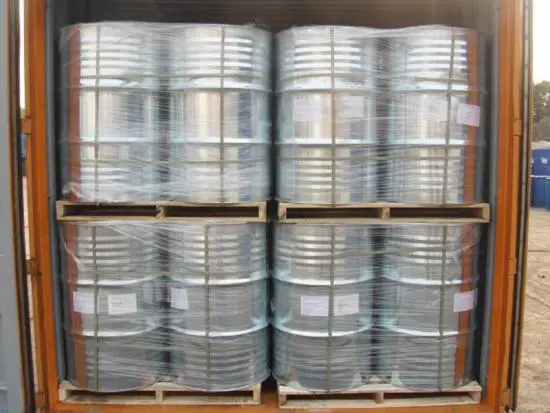
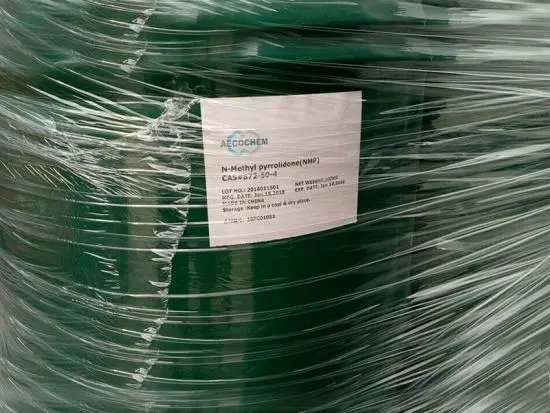
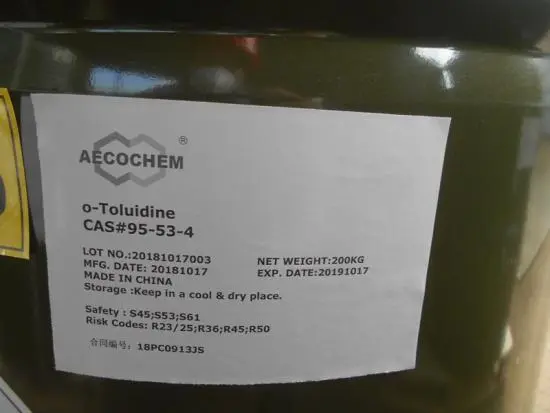
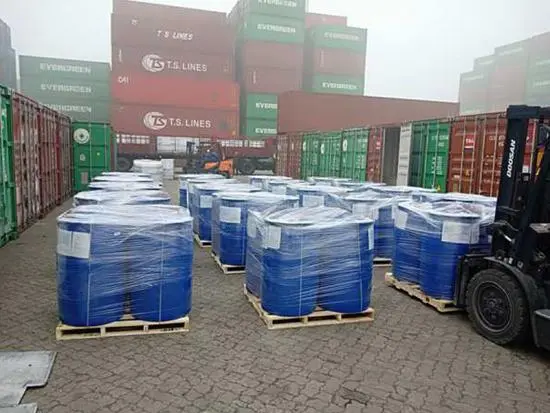
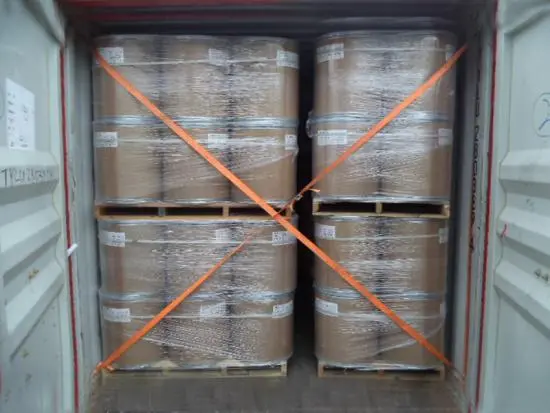
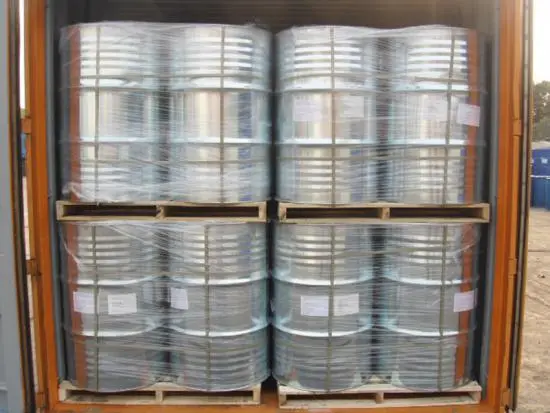
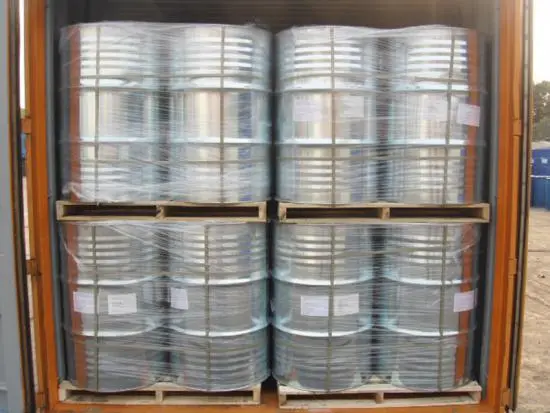
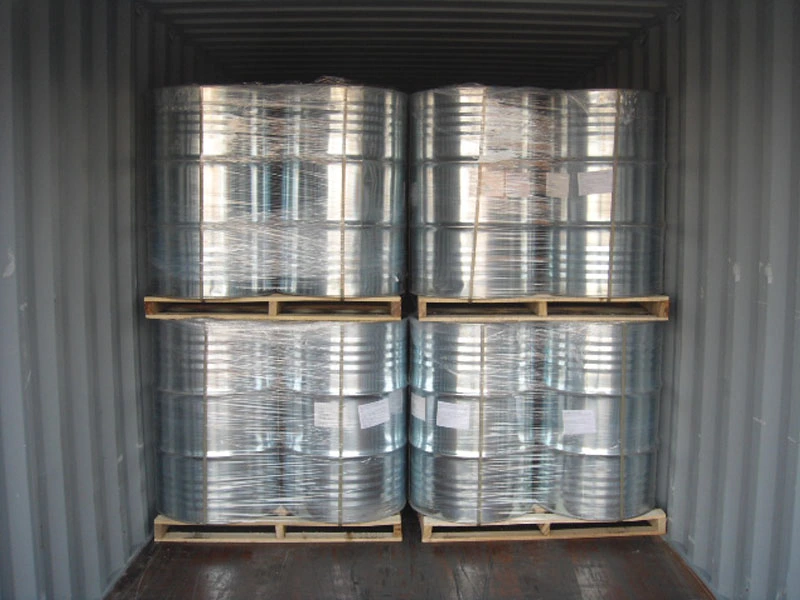
Some photos of shipment:

Hot Tags: Tris(1-chloro-2-propyl) phosphate (TCPP) (CAS 13674-84-5)