 English
 Español
  Português
  русский
  Français
  日本語
日本語  Deutsch
  tiếng Việt
  Italiano
  Nederlands
  ภาษาไทย
  Polski
  한국어
한국어  Svenska
  magyar
  Dansk
Dansk  Suomi
Suomi  العربية
  český
český  ελληνικά
Why Is Isobutyl Methacrylate the Preferred Monomer for High-Performance Polymers?
Isobutyl Methacrylate (IBMA, CAS 97-86-9) is a versatile, hydrophobic methacrylate monomer that imparts exceptional weatherability, flexibility, and chemical resistance to copolymers. This comprehensive article explores its chemical personality, weighs its industrial advantages against handling drawbacks, and provides clear guidance for formulators. From high-gloss coatings to pressure-sensitive adhesives, Isobutyl Methacrylate continues to shape modern material science. Xiamen Aeco Chemical Industrial Co., Ltd. supplies high-purity IBMA to manufacturers worldwide, ensuring stable supply and technical support.
📑 Contents & Key Questions
- 🔬 1. What Exactly Is Isobutyl Methacrylate?
- ⚙️ 2. How Is Isobutyl Methacrylate Produced?
- 📊 3. What Are the Critical Properties of IBMA?
- ⚖️ 4. Isobutyl Methacrylate: Advantages vs. Disadvantages
- 🏭 5. Where Is Isobutyl Methacrylate Used?
- 🧪 6. How to Handle IBMA Safely?
- ❓ 7. Frequently Asked Questions About Isobutyl Methacrylate
🔍 1. What Exactly Is Isobutyl Methacrylate?
Isobutyl methacrylate (often abbreviated IBMA or i-BMA) is an organic ester of methacrylic acid and isobutyl alcohol. At room temperature, it appears as a clear, colorless liquid with a characteristic fruity odor. Its molecular formula is C₈H₁₄O₂, and its structure features a vinyl group that allows free-radical polymerization, plus a branched isobutyl ester side chain. This branched architecture is responsible for the unique balance of flexibility and hardness in the resulting polymers.
Commercial grades typically exceed 98.5% purity and contain stabilizers such as hydroquinone (HQ) or 4-methoxyphenol (MEHQ) to prevent uncontrolled polymerization during storage. Suppliers like Xiamen Aeco Chemical Industrial Co., Ltd. offer IBMA with various inhibitor levels to meet different processing needs.
⚙️ 2. How Is Isobutyl Methacrylate Produced?
The most common industrial synthesis involves esterification of methacrylic acid with isobutyl alcohol, using an acid catalyst (e.g., sulfuric acid or sulfonic acid resins). The reaction is equilibrium-limited, so excess alcohol or removal of water drives the yield. After neutralization and washing, the crude ester is distilled under reduced pressure to obtain polymer-grade monomer.
Alternatively, the acetone cyanohydrin route (still dominant for methacrylates) can be adapted, but direct esterification remains popular due to its simplicity. Xiamen Aeco Chemical Industrial Co., Ltd. utilizes continuous processes to ensure batch-to-batch consistency and low color (APHA < 20).
📈 3. What Are the Critical Properties of IBMA?
Understanding the physical and polymer properties of isobutyl methacrylate is key to formulating successfully.
🔹 Key Physical Properties (Typical values)
| Property | Value / Description |
|---|---|
| CAS Number | 97-86-9 |
| Molecular Weight | 142.20 g/mol |
| Boiling Point | 155°C (at 760 mmHg) |
| Flash Point (closed cup) | ~46°C (115°F) — flammable liquid |
| Density (20°C) | 0.886 g/mL (floats on water) |
| Vapor Pressure | 3.5 mm Hg at 20°C |
| Water Solubility | ~1.3 g/L (slightly soluble) |
🔸 Polymer Properties (homopolymer)
| Property | Value |
|---|---|
| Glass Transition Temperature (Tg) | approx. 53°C |
| Film Character | Hard but not brittle, good flexibility |
| Refractive Index (polymer) | ~1.48 |
The Tg of 53°C places it between poly(methyl methacrylate) (high Tg ~105°C) and poly(butyl acrylate) (low Tg), offering a soft-but-tough feel ideal for coatings requiring both block resistance and flexibility.
⚖️ 4. Isobutyl Methacrylate: Advantages vs. Disadvantages
Every monomer carries a profile of benefits and limitations. Here’s an objective look at isobutyl methacrylate.
| ✅ Advantages (Pros) | ⚠️ Disadvantages (Cons) |
|---|---|
| Outdoor durability: IBMA copolymers exhibit outstanding UV resistance and weatherability, making them first-choice for exterior paints and automotive coatings. | Flammability & storage risk: With flash point ~46°C, it is classified as flammable; may polymerize exothermically if overheated or inhibited lost. |
| Hydrophobicity & chemical resistance: The branched isobutyl group repels water and resists dilute acids/alkalis, perfect for protective coatings. | Moderate odor: Though not as pungent as some acrylates, its fruity odor can be bothersome in enclosed spaces; adequate ventilation needed. |
| Flexibility without plasticizer: Polymers display internal plasticization due to side chains; reduces need for migratory additives. | Limited water miscibility: Insolubility in water complicates some emulsion polymerization setups; requires cosolvents or surfactants. |
| Low shrinkage upon polymerization: Compared to MMA, IBMA shrinks less, enabling better dimensional stability in castings and adhesives. | Skin sensitization potential: Methacrylates, including IBMA, can cause allergic contact dermatitis; strict handling protocols required. |
When sourcing from a reliable partner like Xiamen Aeco Chemical Industrial Co., Ltd., customers receive detailed safety data and inhibitor management recommendations to mitigate risks.
🏭 5. Where Is Isobutyl Methacrylate Used?
The application range of IBMA is broad, touching multiple industries.
- 🎨 High-performance coatings: Automotive basecoats/clearcoats, coil coatings, and architectural paints – IBMA provides gloss retention and resistance to chalking.
- 🩹 Adhesives & sealants: Pressure-sensitive adhesives (PSAs) and laminating adhesives benefit from its tack and peel strength.
- 🖨️ Printing inks and overprint varnishes: Imparts fast drying and rub resistance.
- 🧬 Polymer modifiers: Incorporated into impact modifiers for PVC or engineering plastics.
- 🔬 Specialty polymers: Used in dental materials, artificial nails (with caution to avoid skin contact), and textile finishes.
- 🛢️ Oil additives: Copolymers with IBMA serve as viscosity index improvers or pour point depressants.
Xiamen Aeco Chemical Industrial Co., Ltd. provides IBMA to adhesive formulators in Europe and Asia, helping them achieve consistent polymerization kinetics.
🧯 6. How to Handle Isobutyl Methacrylate Safely?
Safe handling is paramount. According to CAMEO Chemicals and PubChem :
- Storage: Keep in tightly closed containers, away from heat, sparks, and open flame. Store below 30°C and out of direct sunlight. Always ensure inhibitor (e.g., MEHQ) is present and oxygen (if required) is not excluded.
- Personal protection: Wear chemical-resistant gloves (nitrile), safety goggles, and protective clothing. Use in fume hood or with local exhaust.
- Spill management: Remove ignition sources; absorb with inert material (vermiculite, sand) – avoid cellulose or clay-based absorbents due to incompatibility risk.
- Stabilizer maintenance: Do not store under inert gas if oxygen is needed for inhibitor action. Never distill to dryness.
Contact Xiamen Aeco Chemical Industrial Co., Ltd. for Safety Data Sheets (SDS) and guidance tailored to your process conditions.
❓ 7. Frequently Asked Questions About Isobutyl Methacrylate
What is the difference between isobutyl methacrylate and methyl methacrylate (MMA)?
MMA has a methyl group, resulting in a harder, higher-Tg polymer (~105°C), while IBMA’s isobutyl group adds flexibility (Tg ~53°C) and better solubility in non-polar solvents. IBMA also offers improved water repellency and weatherability. Many formulations blend both to fine-tune properties. Xiamen Aeco Chemical supplies both monomers for optimal blending.
Does isobutyl methacrylate require special storage conditions?
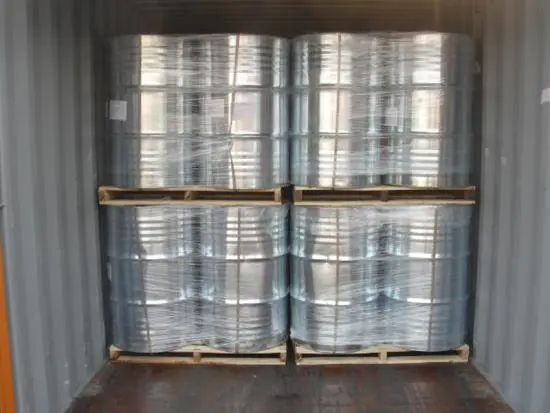
Yes. It must be stored in a cool, well-ventilated area away from oxidizing agents, acids, and bases. The monomer is typically stabilized with 10–50 ppm MEHQ or HQ, and requires oxygen to prevent polymerization. Never store under nitrogen blanket unless inhibitor level is adjusted. Drums should be kept tightly sealed to prevent evaporation and contamination.
Is IBMA suitable for food-contact applications?
Polymers made from IBMA can be used in indirect food-contact articles if they comply with relevant regulations (e.g., FDA 21 CFR 175.105 for adhesives). However, the monomer itself is not food-grade. Always verify final polymer compliance with your local authority. Xiamen Aeco Chemical can provide regulatory data packages upon request.
What are the main impurities in commercial isobutyl methacrylate?
Typical impurities include isobutyl alcohol, methacrylic acid, water, and the corresponding dimer. High-purity grades from Xiamen Aeco Chemical Industrial Co., Ltd. guarantee ≥99.5% IBMA, with water below 0.05% and acid below 0.01% to ensure trouble-free polymerization.
Can isobutyl methacrylate be used in emulsion polymerization?
Yes, but due to its very low water solubility, it requires efficient surfactants and often high-shear emulsification. It is more commonly used in solvent-borne or bulk polymerizations. However, with proper formulation, IBMA can be incorporated into acrylic latexes for specialty paints.
📚 References & Further Reading
- CAMEO Chemicals, NOAA. "Isobutyl Methacrylate" Datasheet.
- Polysciences, Inc. "iso-Butyl methacrylate, ≥ 98.5%".
- PubChem CID 7352, "Isobutyl methacrylate". National Library of Medicine.
- Fisher Scientific / Thermo Scientific Alfa Aesar. "Isobutyl methacrylate, 99.5+%".
- CymitQuimica, "CAS 97-86-9: Isobutyl methacrylate"
📌 For additional technical bulletins and IBMA samples, Xiamen Aeco Chemical Industrial Co., Ltd. maintains a comprehensive library of application notes.
Xiamen Aeco Chemical Industrial Co., Ltd. Your trusted partner for Isobutyl Methacrylate, MMA, acrylates, and specialty monomers. With decades of experience, we deliver purity, safety, and reliability. Contact us today for a quotation, SDS, or technical consultation — our engineers are ready to support your next innovation.
Send Inquiry

X
We use cookies to offer you a better browsing experience, analyze site traffic and personalize content. By using this site, you agree to our use of cookies.
Privacy Policy