 English
 Español
  Português
  русский
  Français
  日本語
日本語  Deutsch
  tiếng Việt
  Italiano
  Nederlands
  ภาษาไทย
  Polski
  한국어
한국어  Svenska
  magyar
  Dansk
Dansk  Suomi
Suomi  العربية
  český
český  ελληνικά
How Does Trimethylol Propane Transform Modern Industry?
Trimethylol Propane (TMP) is a versatile organic compound widely used in chemical and materials industries for synthesizing resins, coatings, lubricants, and polymers. With a chemical formula of C6H14O3, TMP’s three functional hydroxyl groups make it an adaptable building block for many advanced materials.
📌 Article Summary
This comprehensive blog post explores what Trimethylol Propane is, how it’s used in different industries, its benefits and drawbacks, key properties, practical applications, and answers to commonly asked questions. We’ll also include comparisons, tables, and expert insights to help you fully understand the chemistry and relevance of TMP.
📋 Table of Contents
- What Exactly Is Trimethylol Propane?
- Why Is Trimethylol Propane Important in Manufacturing?
- Where Is Trimethylol Propane Most Commonly Used?
- What Are the Benefits of Using Trimethylol Propane?
- What Are the Drawbacks and Risks of TMP?
- Key Physical & Chemical Properties of Trimethylol Propane
- Frequently Asked Questions (FAQ)
🔍 What Exactly Is Trimethylol Propane?
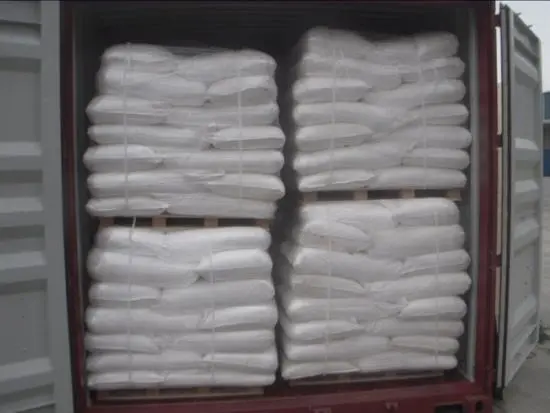
Trimethylol Propane is a three‑functional alcohol (triol) with three hydroxyl groups that make it highly reactive and useful for polymer chemistry and industrial synthesis. It often appears as white flakes or crystals and is soluble in water and alcohols.
- What structural feature makes TMP unique?
Its “three‑arm” structure—three OH groups—allows it to act as a branching point in polymers, enhancing cross‑linking and mechanical properties of the final materials.
🔎 Why Is Trimethylol Propane Important in Manufacturing?
TMP is used as a core precursor for many industrial products like coatings, alkyd resins, polyurethanes, and surfactants. Its trifunctional nature improves product performance, durability, and chemical resistance.
- How does it affect resin chemistry?
TMP enhances cross‑link density, which improves strength, adhesion, and thermal stability when incorporated into resin matrices.
⚙️ Where Is Trimethylol Propane Most Commonly Used?
- Resins & Coatings: Used to produce alkyd and polyester coatings that offer enhanced hardness and durability.
- Polyurethanes: Acts as a polyol in flexible and rigid polyurethane foams.
- Lubricants & Plasticizers: TMP esters serve as high‑performance lubricants.
- Surfactants & Wetting Agents: TMP derivatives help in emulsification and cleaning applications.
- Specialty Products: Including explosives intermediates, textile agents, and printing inks.
- UV‑Curable Monomers: Trimethylolpropane triacrylate used in rapidly curing coatings and inks.
Many chemical suppliers, including Xiamen Aeco Chemical Industrial Co., Ltd., offer high‑quality TMP to industrial clients worldwide for these applications.
✅ What Are the Benefits of Using Trimethylol Propane?
| Benefit | Description |
|---|---|
| Enhanced Cross‑linking | Improves mechanical and thermal properties in resins. |
| Versatility | Applicable to coatings, adhesives, polyurethanes, and more. |
| Improved Durability | Leads to stronger, long‑lasting end products. |
| Compatibility | Works with many industrial monomers and polymers. |
These qualities make TMP especially valuable in high‑performance materials and specialty chemical formulations.
⚠️ What Are the Drawbacks and Risks of TMP?
- Health & Safety Risks: Irritant to eyes and skin; inhalation of dust can irritate the respiratory tract.
- Handling Challenges: Requires proper PPE and ventilation due to irritancy and dust concerns.
- Environmental Considerations: Not inherently biodegradable; industrial waste management is necessary.
Despite these concerns, proper industrial safety practices minimize occupational risks.
📊 Key Physical & Chemical Properties of Trimethylol Propane
| Property | Value |
|---|---|
| Chemical Formula | C6H14O3 |
| Molecular Weight | 134.17 g/mol |
| Appearance | White flakes or crystals |
| Solubility | Soluble in water & alcohols |
| Melting Point | 56‑58°C |
| Boiling Point | 159‑161°C (reduced pressure) |
❓ Frequently Asked Questions (FAQ)
What is Trimethylol Propane used for?
It is used in the manufacture of coatings, resins, polyurethanes, lubricants, surfactants, and specialty chemicals due to its multifunctional hydroxyl groups.
Is TMP safe to handle?
TMP can be a skin and eye irritant and may cause respiratory irritation if inhaled. Proper safety measures like gloves, goggles, and ventilation are required.
Can TMP improve resin properties?
Yes, its tri‑functional nature enhances cross‑linking, leading to improved hardness, adhesion, and chemical resistance in resins.
What forms of TMP derivatives exist?
Derivatives like trimethylolpropane triacrylate and trimethylolpropane triglycidyl ether are used in UV‑curable inks and epoxy formulations, respectively.
Send Inquiry


X
We use cookies to offer you a better browsing experience, analyze site traffic and personalize content. By using this site, you agree to our use of cookies.
Privacy Policy